
-
Global R&D Spending Among Innovators Declines in 2009
Total R&D spending among the world’s top spenders on innovation dropped in 2009 for the first time in the 13 years studied, according to the annual survey by management consulting firm Booz & Company. At the same time, most science-related companies, especially those in the health care industry, increased their R&D spending, with the pharmaceutical…
-
U.S. PTO to Continue Gene Patents, BIO and AUTM File Brief
The Dow Jones news service reports today (2 November) that the U.S. Patent and Trademark Office (U.S. PTO) will continue to consider applications for gene-related patents, while the Justice Department has come out against such patents in a friend-of-court brief filed late on Friday in a case challenging them. David Kappos, undersecretary of commerce for…
-
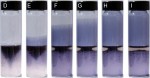
University, Company Develop Nanotech Conducting Polymer Film
A team of chemists and engineers from University of California in Los Angeles (UCLA) and Fibron Technologies Inc. in Inglewood, California has developed a new method for coating large surfaces with nanofiber thin films that are both transparent and electrically conductive. Their method calls for the vigorous agitation of water, dense oil, and polymer nanofibers,…
-
Agricultural Gene Technology Licensed to Dow Chemical
The John Innes Centre (JIC), a plant biology research institute in Norwich, U.K., announced today an exclusive licensing agreement with Dow AgroSciences, a subsidiary of Dow Chemical Company, for technology that enhances the root systems of plants. The technology was developed at JIC by Dr. Liam Dolan and his colleagues. JIC says the team cloned…
-
Four Biotechs Land Affordable Care Act Grants
Four biotechnology companies reported the awarding of grants under a provision in the Patient Protection and Affordable Care Act of 2010, known popularly as the Affordable Care Act. The Act adds to Section 48D of the Internal Revenue Code a provision called the Qualifying Therapeutic Discovery Project Credit. This credit funds projects that show potential…
-
Nanotech Initiative Seeks Comments on Strategy
The National Nanotechnology Initiative (NNI) has drafted a new strategic plan and seeks comments on the draft from the nanotech community. The comment period ends on 30 November 2010. The National Nanotechnology Initiative Strategic Plan, according to NNI, is the framework that guides the nanotechnology work of the 25 NNI member agencies. Its purpose is…
-
Biotech Company Gets Affordable Care Act Grant
Cancer diagnostics company Biomoda Inc. in Albuquerque, New Mexico says it received a grant of more than $244,000 under a provision in Patient Protection and Affordable Care Act of 2010, known popularly as the Affordable Care Act. The grant will fund pilot and later-stage clinical trials of the company’s CyPath diagnostic assay for the detection…
-
Macular Degeneration Test Company Gets Investment
The Ontario Genomics Institute (OGI) in Toronto said today it has made an investment in molecular diagnostics company, ArcticDx Inc., also in Toronto. ArcticDx has developed Macula Risk, a test designed to determine one’s inherited risk for age-related macular degeneration (AMD), the most common form of acquired blindness in the developed world, affecting over 10%…
-
Chip Sales Continue Gains in September
The Semiconductor Industry Association (SIA) reports today (1 November) that semiconductor companies booked worldwide sales of $26.5 billion in September 2010, a gain of 2.9 percent from August when sales were $25.8 billion. Sales for the third quarter of 2010 came to $79.4 billion, a 6.1 percent increase compared to the second quarter when sales…
-
New Process Accelerates Nanoparticle Production
Engineering researchers at Oregon State University in Corvallis have discovered a new method to speed the production rate of nanoparticles by 500 times. The researchers say this advance — for which a patent has been applied — can help make products from nanotechnology more commercially practical. Nanoparticles are extraordinarily tiny groups of atoms and compounds…